Welding & assembly
Welded components and fabricated subassemblies, with joint details, material compatibility and assembly sequence defined around the agreed drawings.
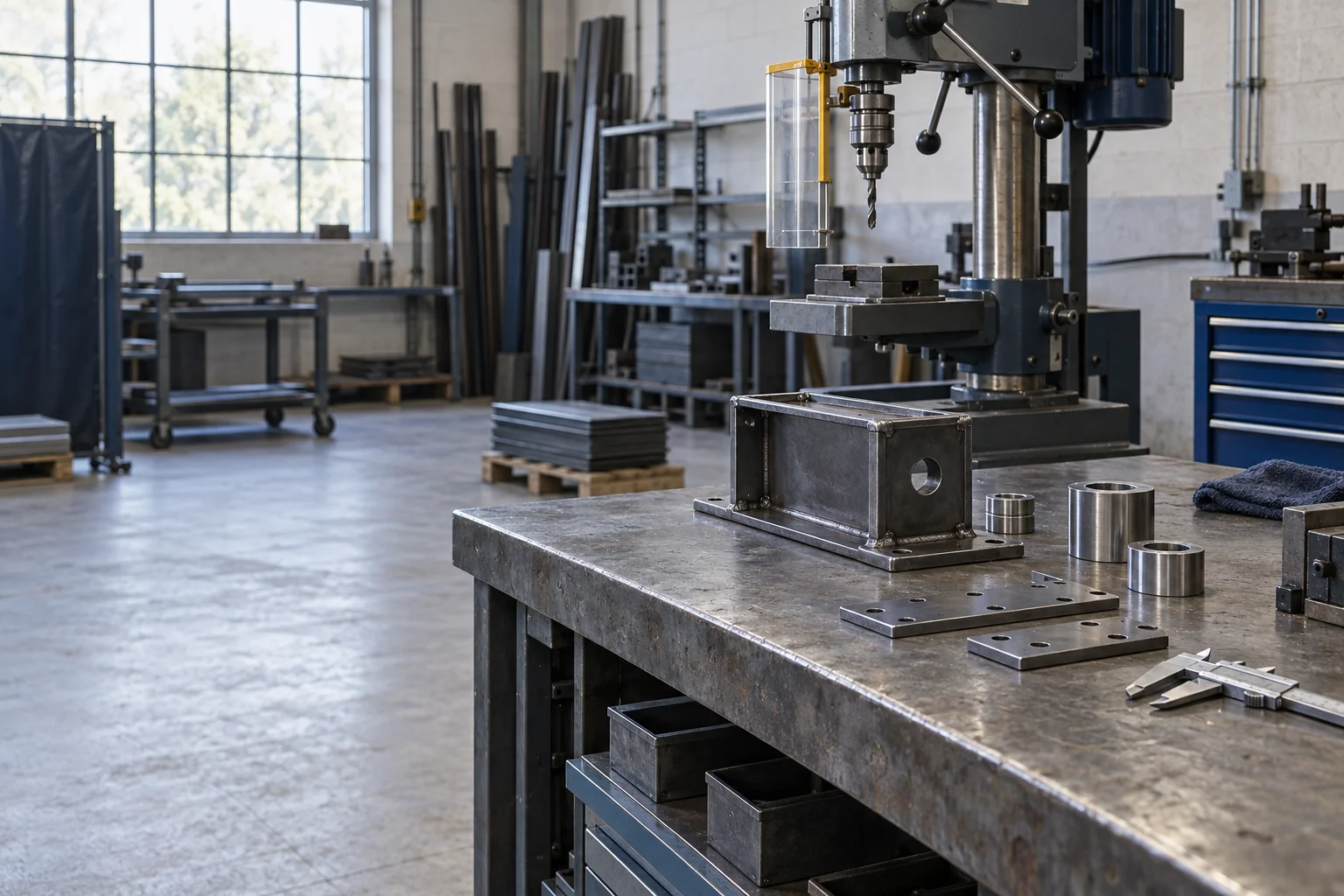
A fabricated assembly often depends on several workshop operations coming together: a welded frame, a drilled mounting plate or a turned part that needs to fit a mating component. Defining those details early helps connect the manufacturing work to the finished application.
Elite Structures works with industrial fabrication requirements to identify the workshop support needed for a component or assembly. Share your drawings, material specifications and critical dimensions so the operations, inspection requirements and delivery scope can be reviewed.
Discuss the work your components need, with suitability and capacity reviewed against the specific job.
Welded components and fabricated subassemblies, with joint details, material compatibility and assembly sequence defined around the agreed drawings.
Hole preparation and machined features for industrial components. Share dimensions, fits, material grades and quantities so the required operations can be assessed.
Dimensional and visual checks against agreed requirements, with critical features, acceptance criteria and any documentation needs identified before work starts.
The brief should explain how a part is used as well as how it is made. That context helps identify the dimensions and interfaces that matter.
Confirm drawing revisions, material, quantity and the condition of any customer-supplied parts. Identify mating components, critical dimensions and areas needing clarification.
Define the operations, tolerances, finish and inspection expectations. Review feasibility, job sequencing and any special tooling or external process requirements.
Check the work against the agreed scope and coordinate packing and handover. Confirm identification and documentation requirements where these are part of the order.
Whether you need support for a single component, an assembly or a batch of parts, start with the latest drawing and the quantity required. Flag the features that affect fit, function or the next operation.
Discuss Manufacturing Support ↗If a dimension or acceptance criterion is undecided, highlight it in the enquiry so it can be resolved before the work is agreed.
Include the material specification, available documentation and current condition in your enquiry. Any additional preparation, suitability checks and responsibility for supplied items can then be agreed as part of the job.
Share the quantity per batch, expected frequency and drawing revision. These details help assess the workshop scope, consistency requirements and delivery planning for the work.
Identify the critical dimensions, required checks and any records you need. Special testing, certification or third-party inspection should be raised at enquiry stage so the responsibilities and scope can be confirmed.