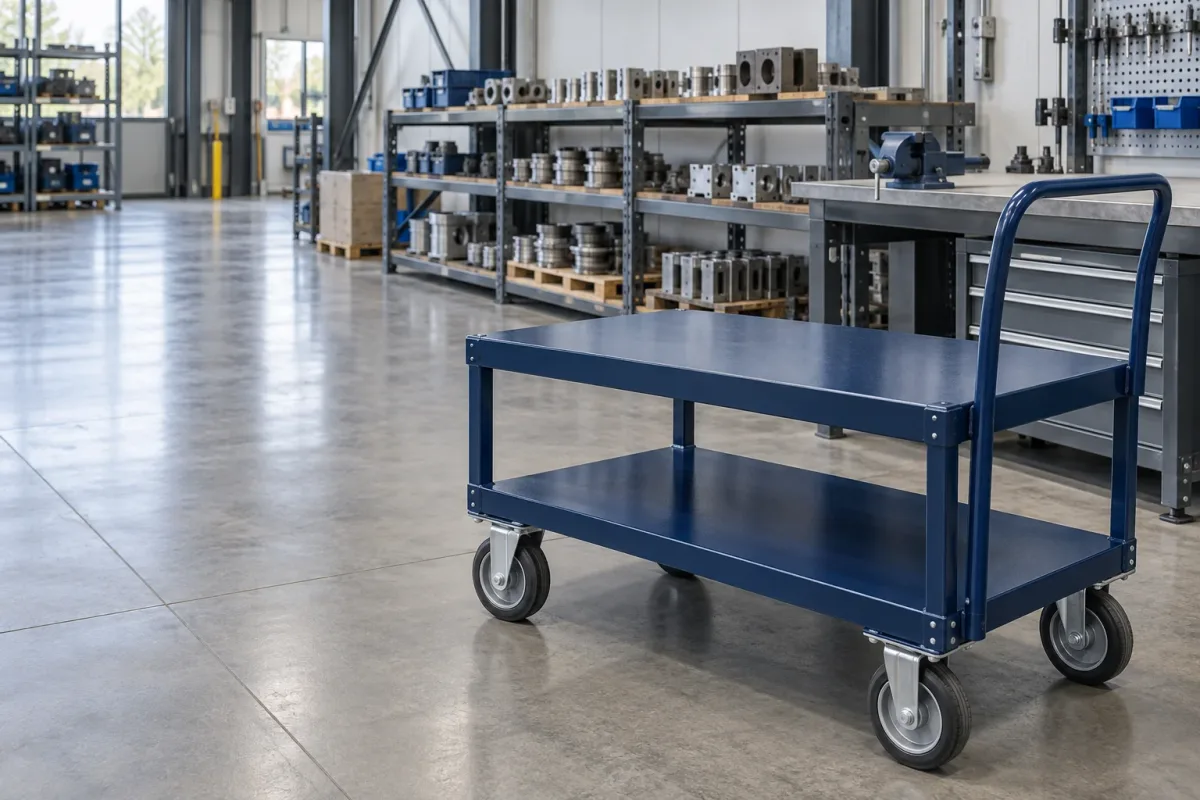
Navy steel platform trolley with caster wheels beside component racks in a workshop
SERVICE / 02 · MATERIAL HANDLING

Material handling equipment.
Built around your workflow.

Custom trolleys, pallets, racks and workstations that connect storage, handling and assembly. Practical metalwork shaped around the parts you use and the way your shop floor operates.

THE RIGHT SUPPORT FOR EVERY STEP

Start with the part.
Understand the journey.

Material handling begins with a simple question: what needs to move, and where does it go next? The shape and weight of a component, the space around it and the way it is loaded all influence the equipment required.

Elite Structures works on fabricated handling equipment for industrial applications, including trolleys, component pallets, racks and workstations. We discuss the load, layout and operating conditions with your team to define a fabrication scope that fits the intended use.

Move componentsOrganise storageSupport assembly
Discuss Your Handling Requirement ↗
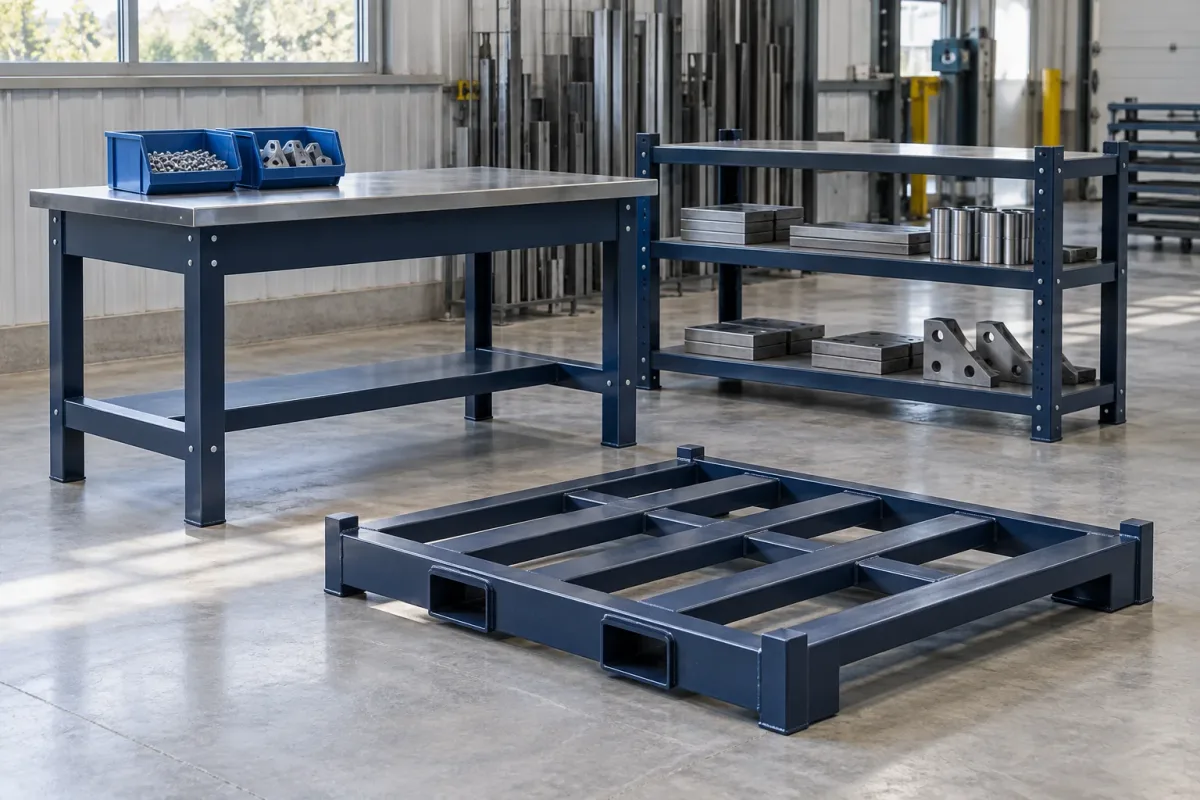
Steel component pallet, low storage rack and assembly workbench in a workshop

One workflow. Connected equipment.

A pallet supports the component, a rack gives it a storage location, and a workstation provides space for the next operation. Plan their dimensions and interfaces together.

EQUIPMENT FOR THE SHOP FLOOR

Move it. Store it.
Work on it.

Each equipment type answers a different part of the handling brief. Start with the task, then define the details.

01 / EQUIPMENT

Industrial trolleys

Platform and component trolleys for moving parts between work areas. Define the deck size, handle arrangement, wheel requirements and component support around the intended route and load.

Movement between storage, assembly and production.
02 / EQUIPMENT

Component & engine pallets

Fabricated steel pallets and support frames shaped around the part being carried. Component contact points, loading method and interfaces with handling equipment form part of the brief.

Supporting and positioning parts for handling.
03 / EQUIPMENT

Industrial racks

Storage frames and racks configured around component dimensions, quantities and access needs. Discuss shelf layout, part separation and available floor space before defining the fabrication package.

Organised storage close to the point of use.
04 / EQUIPMENT

Workstations & assembly tables

Fabricated workbench frames and tables for production tasks. Working height, usable surface area, storage and equipment mounting details are considered together.

A workspace arranged around the operation.
Two-tier fabricated platform trolley with push handle and four caster wheels
DETAILS THAT DEFINE THE EQUIPMENT

More than a frame
on wheels.

The trolley shown brings several decisions into one assembly: the platform footprint, shelf clearance, handle position and wheel arrangement. Those details should follow the component and the route, rather than a standard outline alone.

Share aisle widths, turning areas, floor conditions and how parts are placed on and removed from the trolley. For irregular components, describe the support points and any surfaces that must be protected.

Share Your Layout ↗
FROM REQUIREMENT TO FABRICATION

A clear brief.
A practical equipment plan.

Connect the fabrication details to the load, the operator’s task and the surrounding equipment before work begins.

01 / UNDERSTAND

Review the load & route

Identify the component dimensions, weight and support needs. Discuss loading and unloading, movement frequency, floor conditions and the space available at each work area.

02 / DEFINE

Agree the equipment details

Confirm the layout, materials, mounting points, wheels or feet, and finish requirements. Resolve critical dimensions and agree the design, inspection and acceptance responsibilities.

03 / COORDINATE

Fabricate & review the assembly

Work to the agreed drawings and review the finished assembly against the specified requirements. Coordinate delivery and any agreed fit checks with the intended component or work area.

PREPARE YOUR ENQUIRY

Tell us what moves.
Show us where it goes.

A component drawing, a photograph of the current setup or a simple floor-layout sketch can help explain the requirement. Include the details that affect fit, access and handling.

Start an Equipment Enquiry ↗

Useful details to share

  • Component dimensions, weight and load distribution
  • Quantity of equipment and intended frequency of use
  • Loading, unloading and movement method
  • Aisle widths, floor conditions and available space
  • Working height, contact points and mating equipment
  • Material, finish, inspection and delivery requirements

Load capacity and any special testing requirements are defined for the specific equipment and agreed scope.

COMMON QUESTIONS

Before we begin.

Can equipment be made around an existing component?

Share the component drawing or dimensions, weight and the points where it can be supported. Include photographs and details of the loading method so the equipment layout can be reviewed.

Can I request several matching trolleys or racks?

Yes. Include the quantity, any variations and whether delivery is required in stages. This helps define a consistent fabrication package and the programme for the requirement.

What if I do not have a finished drawing?

Start with the application, key dimensions and photographs or a sketch. The equipment details, design responsibilities and acceptance requirements need to be agreed before fabrication.

LET’S TALK MATERIAL HANDLING

Your parts. Your process.
Equipment with a purpose.

Discuss Your Requirements ↗